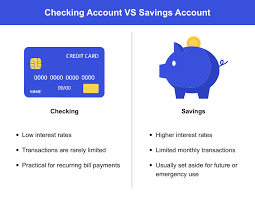
When it comes to managing your money, choosing the right type of bank account is one of the most important financial decisions you can make. Most people are familiar with checking and savings accounts, but many aren’t entirely sure which account is best suited to their needs. While both serve distinct purposes, understanding their features, benefits, and limitations can help you make informed financial choices. In this article, we’ll dive deep into savings vs. checking accounts, explore their differences, and guide you in selecting the account that aligns with your financial goals.
Understanding Checking Accounts
A checking account is primarily designed for day-to-day financial transactions. This type of account allows you to deposit money, write checks, pay bills, and make purchases using a debit card. Checking accounts are highly liquid, meaning you can access your money anytime without penalties.
Key Features of Checking Accounts
- Unlimited Transactions: Most checking accounts allow unlimited withdrawals, deposits, and transfers.
- Debit Card Access: Checking accounts come with debit cards, enabling cash withdrawals and purchases.
- Bill Pay Services: Online bill pay options make it easier to manage recurring expenses.
- Low Interest Rates (or None): Typically, checking accounts offer little to no interest on the balance.
- Overdraft Protection: Some checking accounts provide overdraft protection, though fees may apply.
Advantages of Checking Accounts
- Accessibility: You can access funds anytime via ATMs, debit cards, or online banking.
- Convenience: Ideal for paying bills, rent, groceries, and other daily expenses.
- No Withdrawal Limits: Unlike savings accounts, checking accounts don’t restrict the number of monthly withdrawals.
Disadvantages of Checking Accounts
- Low or No Interest: Your money doesn’t grow significantly in a checking account.
- Fees: Monthly maintenance fees or overdraft charges may apply.
- Temptation to Overspend: Easy access to funds can lead to impulsive spending.
Understanding Savings Accounts
A savings account is designed to help you save money over time while earning interest. Unlike checking accounts, savings accounts limit the number of withdrawals you can make per month. They are ideal for building an emergency fund, saving for big purchases, or investing in long-term goals.
Key Features of Savings Accounts
- Interest Earnings: Savings accounts pay interest, helping your money grow over time.
- Limited Withdrawals: Federal regulations often limit withdrawals or transfers to six per month.
- Secure Storage: Money in savings accounts is insured by the FDIC (up to $250,000 per depositor per bank).
- Linked to Checking Accounts: Many banks allow you to link savings accounts to checking accounts for easier transfers.
Advantages of Savings Accounts
- Interest Growth: Earn a return on your balance, which is higher than checking accounts in most cases.
- Financial Discipline: Withdrawal limits encourage you to save rather than spend.
- Safety: FDIC insurance protects your funds against bank failures.
- Goal-Oriented Savings: Perfect for short-term or emergency savings goals.
Disadvantages of Savings Accounts
- Limited Access: Withdrawal restrictions can be inconvenient in emergencies.
- Lower Interest Rates than Investments: Savings accounts generally offer lower returns than stocks or bonds.
- Minimum Balance Requirements: Some accounts require a minimum balance to avoid fees or earn interest.
Key Differences Between Checking and Savings Accounts
| Feature | Checking Account | Savings Account |
|---|---|---|
| Primary Purpose | Day-to-day transactions | Saving money and earning interest |
| Accessibility | High (unlimited withdrawals) | Limited (usually 6 withdrawals/month) |
| Interest | Low or none | Higher than checking accounts |
| Fees | Possible monthly fees or overdraft | May have minimum balance fees |
| Debit Card | Yes | Sometimes (depending on bank) |
| Ideal For | Paying bills, shopping, daily use | Emergency funds, short-term savings |
Which Account Should You Choose?
Choosing between a checking account and a savings account largely depends on your financial goals and spending habits.
When a Checking Account is Right for You
- You need frequent access to your money for daily expenses.
- You prefer convenience with debit card and online bill pay services.
- You want to avoid cash handling and prefer digital transactions.
- You don’t plan on keeping large sums of money idle in the account.
When a Savings Account is Right for You
- You want to build an emergency fund or save for future goals.
- You want your money to earn interest while remaining safe.
- You struggle with spending discipline and need to limit withdrawals.
- You’re saving for specific goals like vacations, home purchases, or large bills.
The Benefits of Having Both Accounts
For most people, the ideal approach is to maintain both checking and savings accounts. This strategy allows you to enjoy the convenience of a checking account for everyday spending while using a savings account to grow your money over time. Here’s how this can work:
- Emergency Fund: Keep three to six months of living expenses in a savings account.
- Bill Management: Use your checking account for recurring bills, rent, and daily expenses.
- Automatic Transfers: Set up automatic transfers from checking to savings to build savings consistently without thinking about it.
- Financial Tracking: Having two accounts can help separate spending money from savings money, improving budgeting and financial awareness.
Tips for Maximizing Your Accounts
Choosing the Right Checking Account
- Look for accounts with no monthly fees or low minimum balance requirements.
- Consider banks that offer cashback or rewards programs on debit card spending.
- Check overdraft policies to avoid unnecessary fees.
- Opt for online or mobile banking features for convenience.
Choosing the Right Savings Account
- Compare interest rates across different banks to find the best Annual Percentage Yield (APY).
- Look for accounts with no withdrawal fees or low minimum balance requirements.
- Consider high-yield online savings accounts for better returns.
- Automate transfers to ensure consistent saving.
Common Misconceptions About Checking and Savings Accounts
- “Savings accounts are only for the wealthy.”
Even small amounts can grow over time thanks to compound interest. Starting with $50 per month is better than nothing. - “Checking accounts don’t earn interest.”
While most don’t, some checking accounts offer interest or rewards programs. Always compare options. - “I don’t need both accounts.”
Separating spending and saving money makes it easier to track finances and avoid overspending. - “Online banks are less safe.”
Online banks are FDIC-insured just like traditional banks, and they often offer higher interest rates.
Making the Decision: Savings vs. Checking
Here’s a simple step-by-step approach to decide which account suits your needs:
- Assess Your Spending Habits: If you spend frequently, a checking account is essential. If you struggle to save, a savings account is key.
- Define Your Goals: Short-term goals (vacation, bills) may be managed with a checking account. Long-term goals (emergency fund, down payment) require a savings account.
- Consider Accessibility: Do you need instant access to funds, or can your money stay untouched for a while to grow?
- Compare Accounts: Look at fees, interest rates, and banking features.
- Use Both Strategically: Most people benefit from having both accounts, using checking for daily use and savings for building wealth.
Conclusion
When it comes to savings vs. checking accounts, there is no one-size-fits-all answer. Checking accounts provide flexibility and convenience for daily transactions, while savings accounts encourage financial discipline and allow your money to grow over time. By understanding the key differences and benefits of each, you can make informed choices that align with your financial goals. For most people, the best strategy is a combination: use a checking account for spending and a savings account for saving. This dual-account approach ensures that you are prepared for emergencies, avoid overspending, and make the most of your hard-earned money.
Ultimately, the right account depends on your financial habits, goals, and priorities. Take the time to evaluate your needs, compare options, and select the accounts that will help you achieve financial security and peace of mind.
Meta Description (SEO-friendly):
Discover the differences between checking and savings accounts, their benefits, and how to choose the right one for your financial goals. Learn when to use each for optimal money management.
SEO Keywords:
- Savings vs checking accounts
- Best bank account for you
- Checking account benefits
- Savings account benefits
- How to choose a bank account
- Difference between checking and savings
If you want, I can also create a highly SEO-optimized version of this article with headings, subheadings, keyword density strategy, and internal/external links ready to post—perfect for boosting Google rankings.
Do you want me to do that next?